
Special to The Canton News
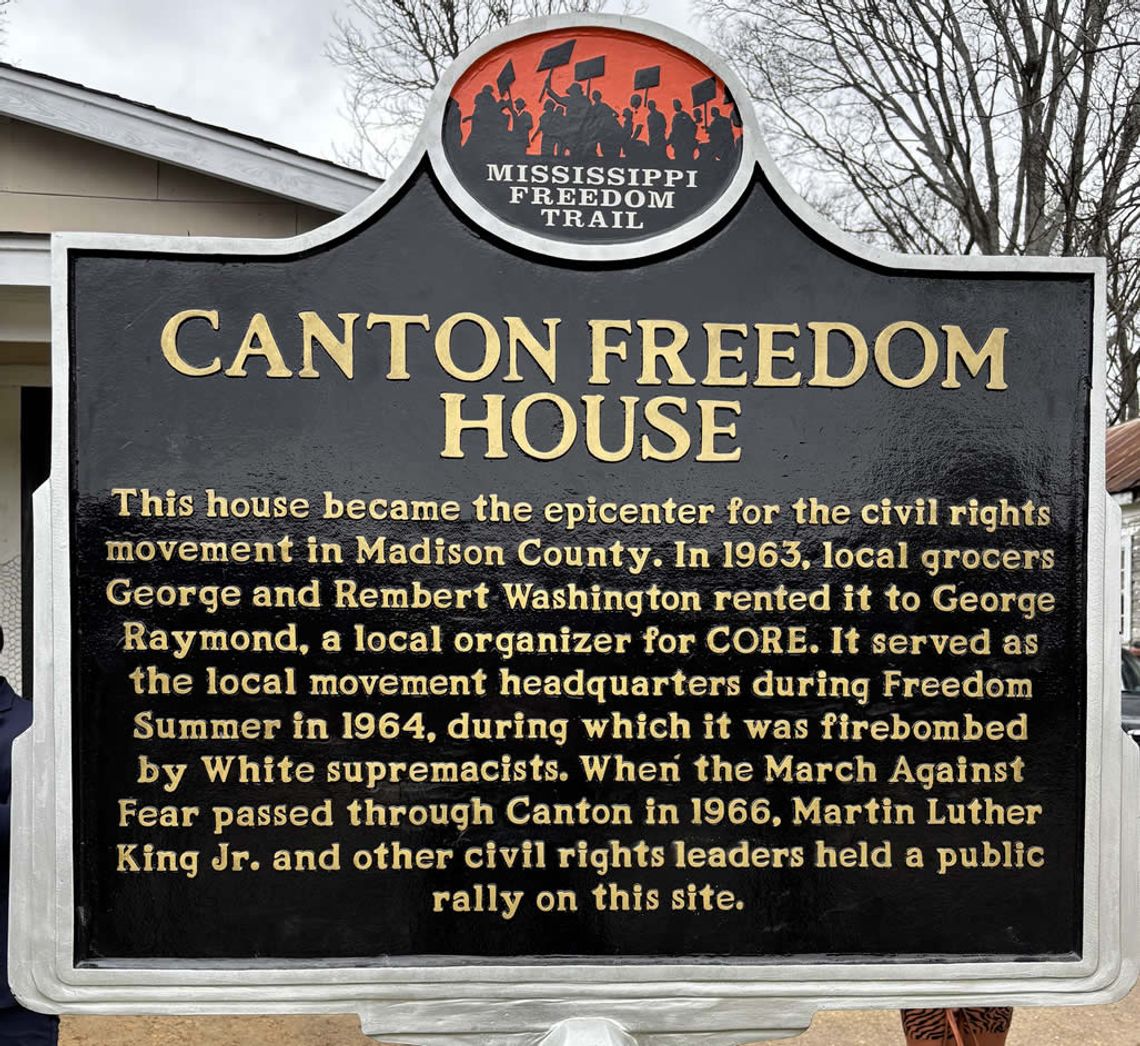
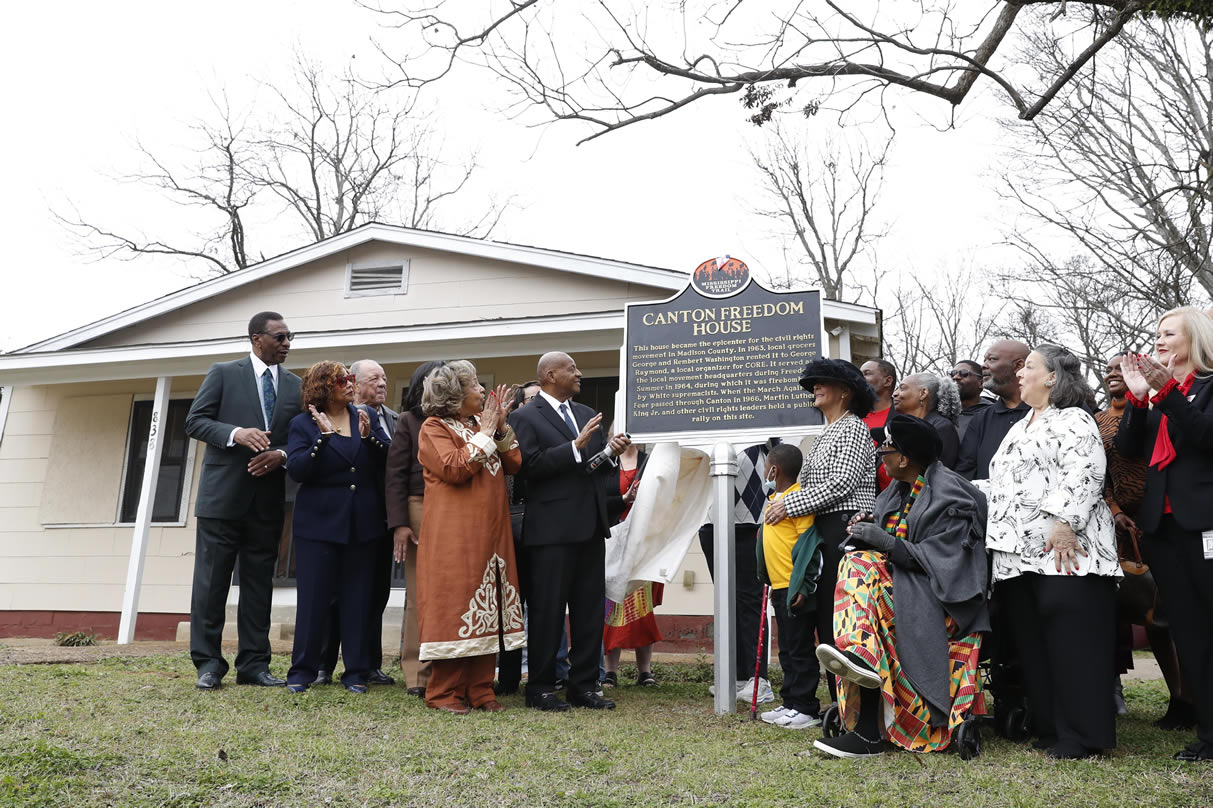
Visit Mississippi and the Mississippi Humanities Council recently unveiled a new Mississippi Freedom Trail marker in Canton honoring the Canton Freedom House.
Remarks were delivered by civil rights veterans, as well as local and state dignitaries, with a special performance by the Rembert Washington Memorial Chorale.
The Canton Freedom House served as a crucial headquarters for the Congress of Racial Equality (CORE) during the Civil Rights Movement. Canton residents George and Rembert Washington rented the home to CORE organizer and Freedom Rider George Raymond, providing him a safe base for organizing protests and voter registration drives.
In 1964, white supremacists fired shots into the house and attempted to bomb it. Civil rights leaders—including Martin Luther King Jr. and James Meredith—used the Freedom House as a safe place and planning site.
Today, it is the last surviving CORE Freedom House in Mississippi. Restored and operated as a museum by Glen Cotton, grandson of the Washingtons, the home features photographs, articles and memorabilia. Guided tours are available by appointment.
“The Canton Freedom House stands as a testament to ordinary people who risked everything for freedom,” said Visit Mississippi director Rochelle Hicks. “Its place on the Mississippi Freedom Trail is a part of ensuring their courage and accomplishments never fade from our collective memory.”
About the Mississippi Freedom Trail:
The Mississippi Freedom Trail pays tribute to Mississippi’s profound impact on the U.S. Civil Rights Movement. The statewide initiative features over 40 markers commemorating the individuals, locations and pivotal events that were instrumental in the struggle for civil rights. Administered by Visit Mississippi in partnership with the Mississippi Humanities Council, the Mississippi Freedom Trail is supported by a State Tourism Grant from the U.S. Economic Development Administration.
To learn more about the Mississippi Freedom Trail, visit VisitMississippi.org and or listen to the U.S. Civil Rights Trail podcast.
Comment
Comments