
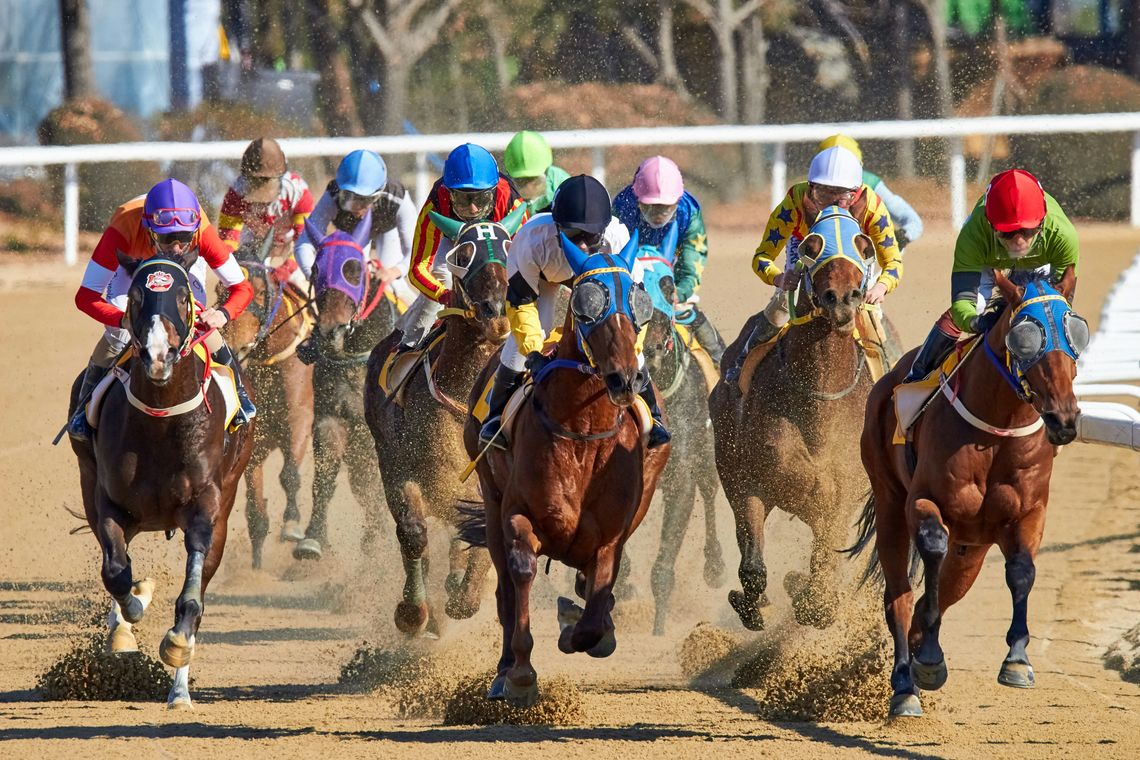
Horse racing has no shortage of major occasions, but Breeders’ Cup weekend has a character all its own. Rather than building everything around a single headline race, the World Championships bring multiple divisions together across two days, creating a showcase for horses with very different strengths.
The 2026 edition takes place at Keeneland on October 30 and 31, with 14 championship races ranging from short turf sprints to the 1¼-mile Breeders’ Cup Classic. That variety is central to the weekend's appeal. Fans aren't simply waiting for one defining moment; they're watching a succession of different racing puzzles unfold.
Fourteen Races Create a Different Kind of Championship
Many of racing's biggest occasions revolve around one race. Breeders’ Cup weekend takes a broader approach. Its 2026 schedule contains 14 championship races, giving different types of horses an opportunity to compete at the highest level under conditions suited to their particular strengths.
Distances range from 5½ furlongs in races such as the Juvenile Turf Sprint and Turf Sprint to 1½ miles in the Breeders’ Cup Turf. The program also moves between dirt and turf, while separate races cater to juveniles, fillies and mares, sprinters and horses suited to longer distances.
That creates dramatic tempo changes. One race may be an explosive dash in which every fraction of a second matters, while another develops gradually as jockeys judge pace and decide when to ask their horses for a decisive move.
Both winners leave as Breeders’ Cup champions. They simply get there in very different ways, which is part of what keeps the weekend from feeling repetitive even with so many major races packed together.
The World's Racing Routes Converge in One Place
The Breeders’ Cup also has an international dimension that changes the complexion of its fields. The Challenge Series provides qualifying opportunities across numerous racing jurisdictions, with the 2026 schedule including races in countries such as Japan, South Africa, Argentina, Chile, France, Ireland and the United Kingdom, alongside qualifiers in North America.
Eligible nominated horses that win designated Challenge races earn automatic starting positions in corresponding Breeders’ Cup races, with pre-entry and entry fees paid under the program’s rules.
That pathway can bring together horses whose seasons have looked completely different. A European turf runner may arrive after competing on sweeping grass courses, while a North American rival has spent much of the year racing under a different set of conditions.
Those contrasts give casual viewers an easy storyline to follow and experienced racing fans more details to examine. Previous opposition, travel, surface preferences and racing style all become pieces of the puzzle when horses from different circuits finally meet.
Every Race Presents a Different Puzzle
The changing conditions also make Breeders’ Cup weekend particularly interesting for bettors. Assessing a short dirt sprint isn't the same exercise as studying a 1½-mile turf contest. Distance, surface, pace, post position and recent form can carry different significance from one race to the next.
The Breeders' Cup odds on FanDuel provide a snapshot of how the different championship fields are being assessed as the event approaches. Those prices make more sense when considered alongside the characteristics of each race rather than treated as a substitute for studying the runners themselves.
A short sprint can punish a slow beginning because there may be little time to recover. Longer races introduce different questions. A horse may have enough raw ability to compete but still need the right pace and positioning to use that ability effectively.
Surface adds another variable. The 2026 program contains championships on both dirt and turf, meaning strong form under one set of conditions doesn't automatically translate to another.
That constant change gives the weekend its analytical appeal. Just as viewers become comfortable with one type of contest, the next field can demand a different way of thinking.
The Classic Anchors the Weekend’s Biggest Moments
The Breeders’ Cup Classic remains the marquee attraction. The 2026 race is scheduled over 1¼ miles on dirt with a $7 million purse, making it the richest race on the championship program.
Its prominence doesn't reduce the rest of the weekend to a supporting act. By the time the Classic field heads toward the starting gate, champions have already been crowned across numerous divisions. The event can celebrate an elite sprinter, turf specialist, filly or mare and distance runner without requiring those horses to prove themselves under identical conditions.
That distinction separates the Breeders’ Cup from occasions dominated almost entirely by one race. The Classic can provide the crescendo while the races surrounding it retain championship significance of their own.
For spectators, that creates a different rhythm. Attention doesn't disappear once an early feature is over. Another major field is never far away, and the story can change quickly from one division to the next.
Future Stars Get Their Stage Before Saturday Arrives
Breeders’ Cup weekend isn't only about established names. Five championship races on the 2026 schedule are restricted to 2-year-olds, covering dirt and turf and distances from 5½ furlongs to 1 1/16 miles.
Young horses bring a different type of uncertainty. They haven't built the long records associated with older runners, and they're still developing physically and gaining racing experience. That leaves viewers trying to judge not only what they've already achieved, but how much improvement may still be ahead.
Friday's juvenile focus gives the weekend an appealing sense of looking forward. A horse entering the gates as a promising youngster can leave as a Breeders’ Cup winner, potentially carrying much greater expectations into the following season.
Saturday then shifts much of the attention toward established divisions. The transition from emerging talent to accomplished older horses helps the two days feel connected without becoming identical.
Keeneland Adds Its Own Character
The 2026 championships take place at Keeneland in Lexington, Kentucky. It will be the venue's fourth time hosting the Breeders’ Cup, following previous editions in 2015, 2020 and 2022.
The setting fits naturally with the occasion. Keeneland has been staging racing since 1936 and sits in a region closely associated with Thoroughbred breeding and racing, giving championship weekend a backdrop with deep connections to the sport.
Fans who aren't at Keeneland can still follow the championships across traditional broadcasts and digital platforms. NBC Sports and FanDuel TV are scheduled to televise the 2026 World Championships, while Peacock will carry NBC's Breeders’ Cup coverage online. The official Breeders’ Cup app also offers live streams of all 14 championship races, giving viewers several ways to follow the weekend away from the track.
The venue also becomes another factor for anyone studying the races. Horses arrive after following different paths through the season, and previous performances elsewhere don't guarantee they'll encounter the same circumstances at Keeneland.
For spectators, the experience is more immediate. A turf championship can be followed by a dirt contest with a completely different tactical shape, while horses and connections from multiple racing circuits share the same grounds. The atmosphere barely has time to settle before attention turns to another significant race.
Two Days, Many Different Ways to Win
Breeders’ Cup weekend works because it doesn't ask every great racehorse to be great in the same way. Speed can define one championship, stamina another, while surface preference, positioning and tactical versatility can shape the next.
That variety gives the event its distinctive rhythm. Emerging talent, international challengers and established stars arrive through different routes before sharing one championship stage. Expectations may form well before the gates open, yet the weekend keeps producing new questions from race to race. Ultimately, that's the attraction: many different paths lead to the Breeders’ Cup, and every championship has to be earned on the track.
Comment
Comments